Jovens Gênios is a Brazilian edtech that combines AI and gamification to personalize learning, reduce educational gaps, and support impactful public policies, reaching over 1 million users across 2,000+ institutions with proven gains in engagement and learning outcomes.
Company
Jovens Gênios
Timeline
2022
—
2026
Role
Product Designer
Project overview
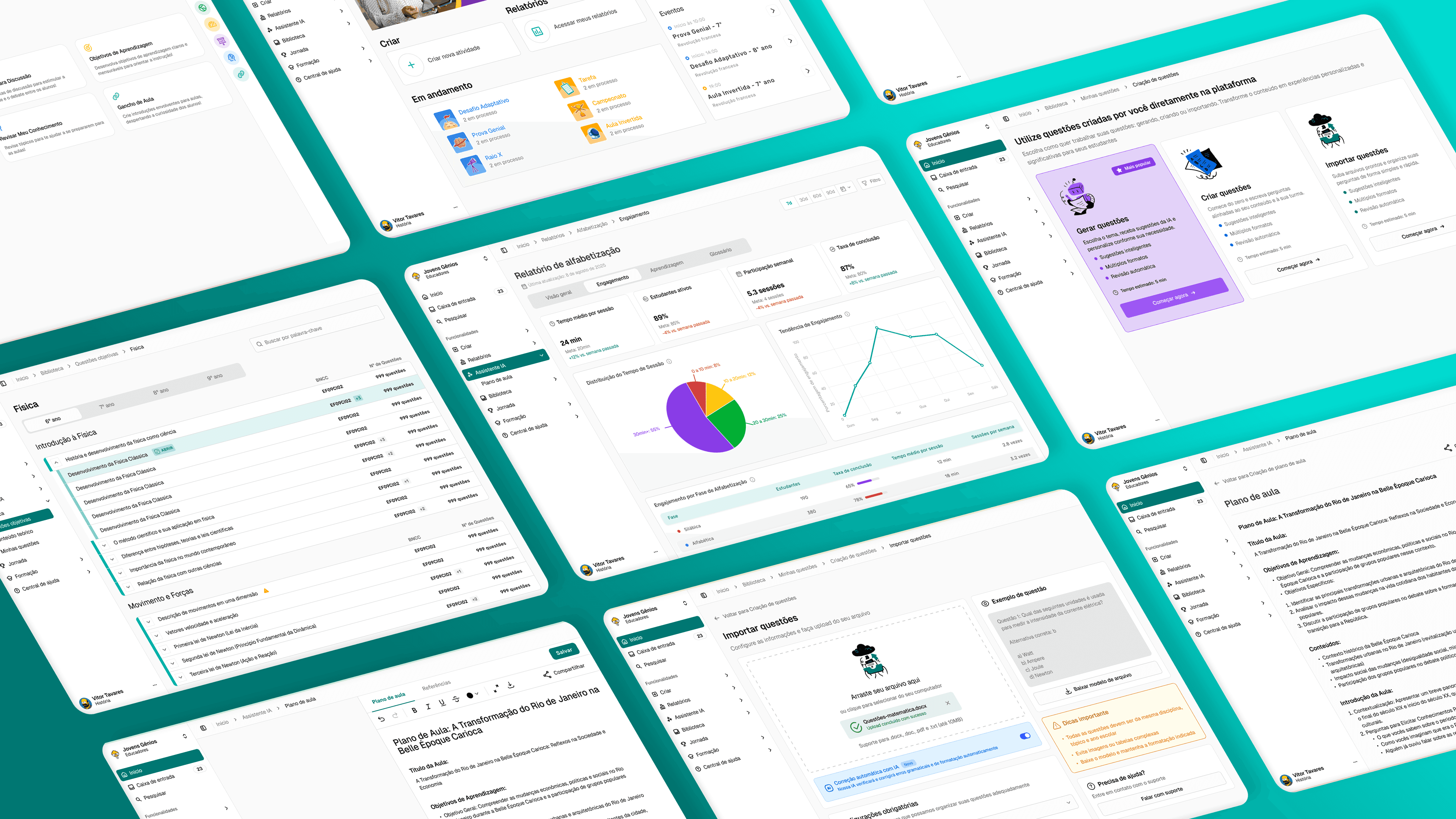
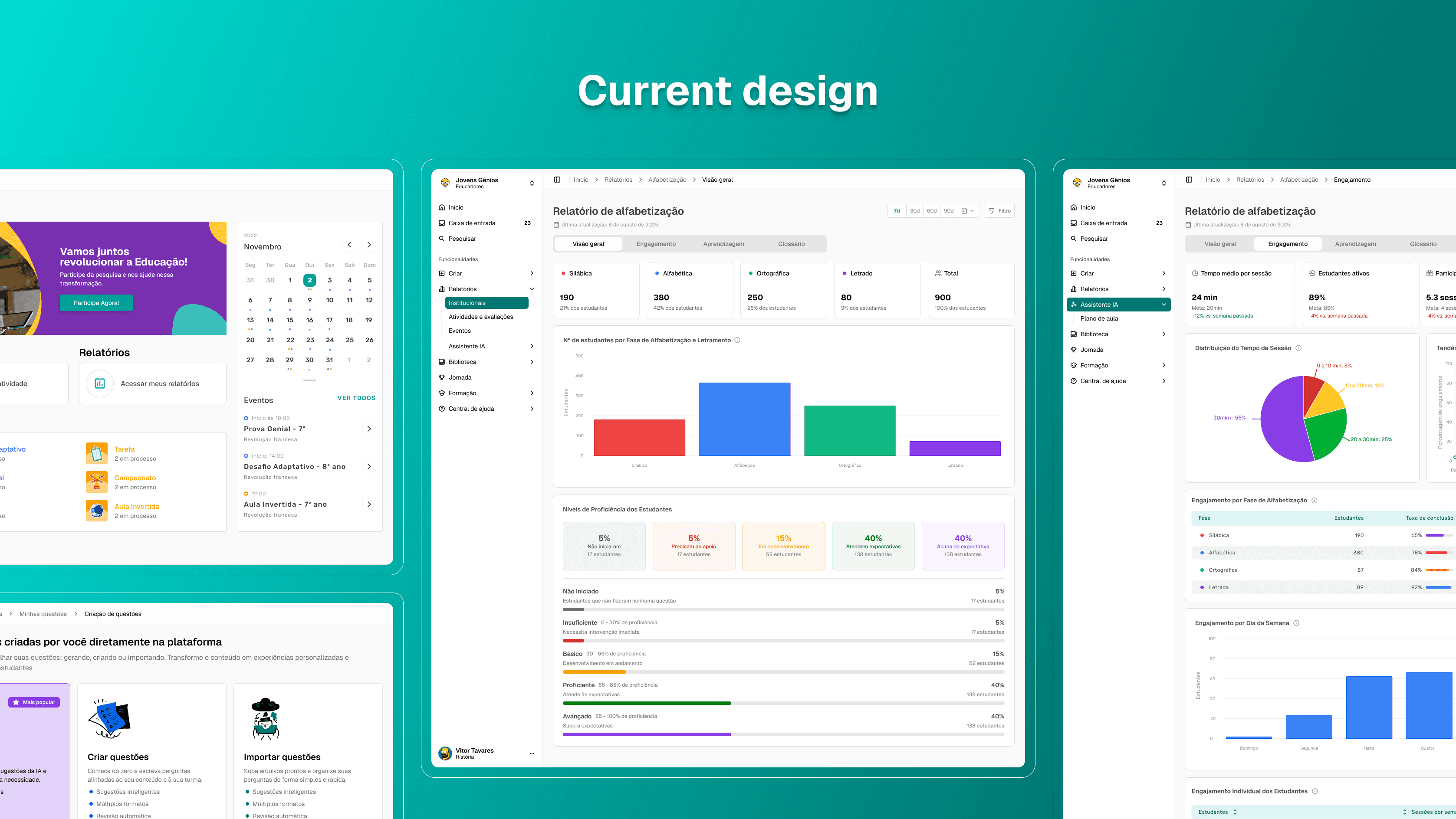
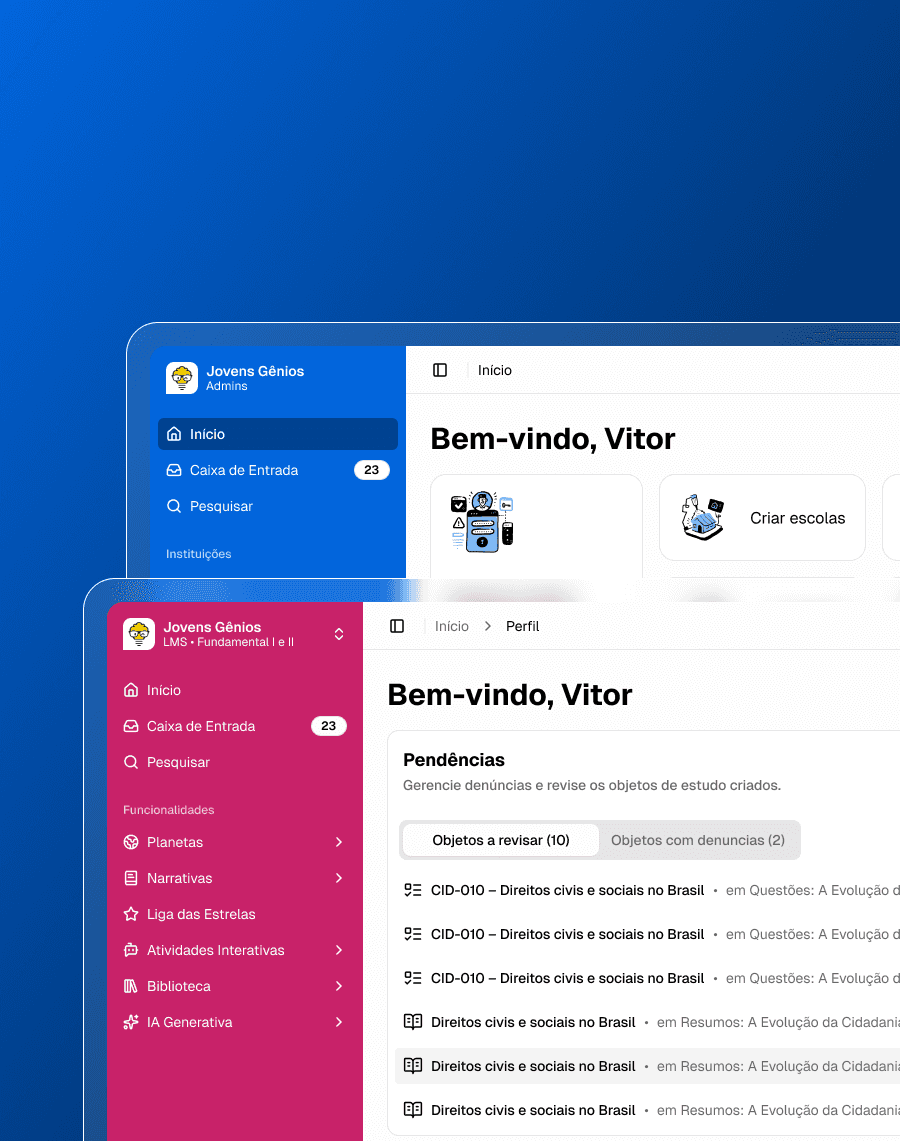
When I joined Jovens Gênios, I was appointed as the lead Product Designer responsible for the Educators’ Platform. My mission went far beyond a visual refresh: the platform needed to be rebuilt from the ground up.
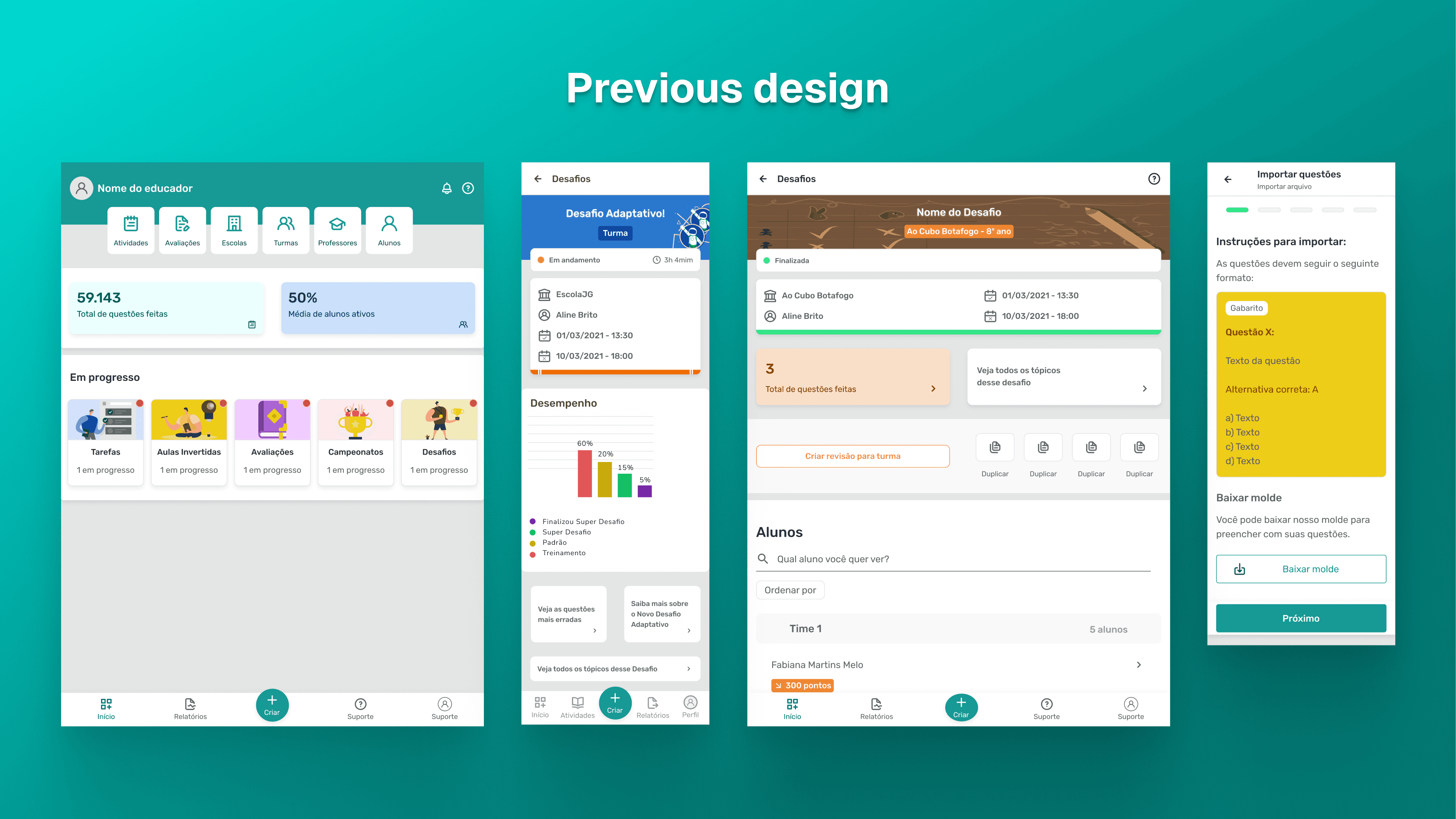
At the time, the product was designed as mobile-first, but in practice it was mobile-only. On desktop, the experience was severely compromised — the interface behaved like a stretched tablet, with mobile dimensions, bottom navigation, and touch-first interactions entirely misaligned with desktop usage. This resulted in a frustrating and inefficient experience for educators.
Before proposing solutions, I focused on understanding real usage patterns. Data revealed that over 80% of educators accessed the platform via desktop or notebook, while the platform’s CSAT was critically low at 30%. Educators actively resisted using the product, which directly impacted student engagement, contract renewals, and revenue.
My goal was to rebuild trust with educators by delivering a platform that genuinely supported their daily workflow, respected their context, and scaled with institutional needs — all within a tight 3-month deadline for a full public relaunch.
Challenges
The project started in a moment of active crisis. Educators avoided the platform, schools questioned the value of the investment, and churn was increasing as a direct consequence of low adoption.
The main challenges included:
Severe mismatch between user behavior and product design, with desktop users forced into a mobile-centric experience.
Low satisfaction and resistance from educators, who perceived the platform as a blocker rather than an enabler.
High business pressure, with churn impacting B2B and B2Gov contracts.
Short delivery timeline, requiring fast yet confident decisions.
Technical and business constraints, demanding close collaboration with engineering and product stakeholders.
To address this, I conducted a full platform audit, combining usability analysis, qualitative interviews with educators, behavioral data, and system limitations. I worked closely with engineering to understand feasibility, while continuously aligning design decisions with business rules and strategic goals.
Throughout the process, I also established a data-driven design practice, leveraging tools such as Microsoft Clarity, Amplitude, and PostHog to monitor usage patterns, validate hypotheses, and track the impact of design decisions.
Results
The redesigned platform launched successfully within the proposed timeline and delivered immediate and measurable impact.
Key outcomes included:
CSAT increased from 30% to over 90%, remaining consistently high after launch.
Churn was significantly reduced, directly linked to improved educator adoption.
The platform became a strong driver for new B2B and B2Gov contracts, contributing to over R$20M in revenue.
Educators shifted from resistance to advocacy, actively engaging with the platform in their daily routines.
Post-launch, I continued evolving the product by introducing high-impact features, including:
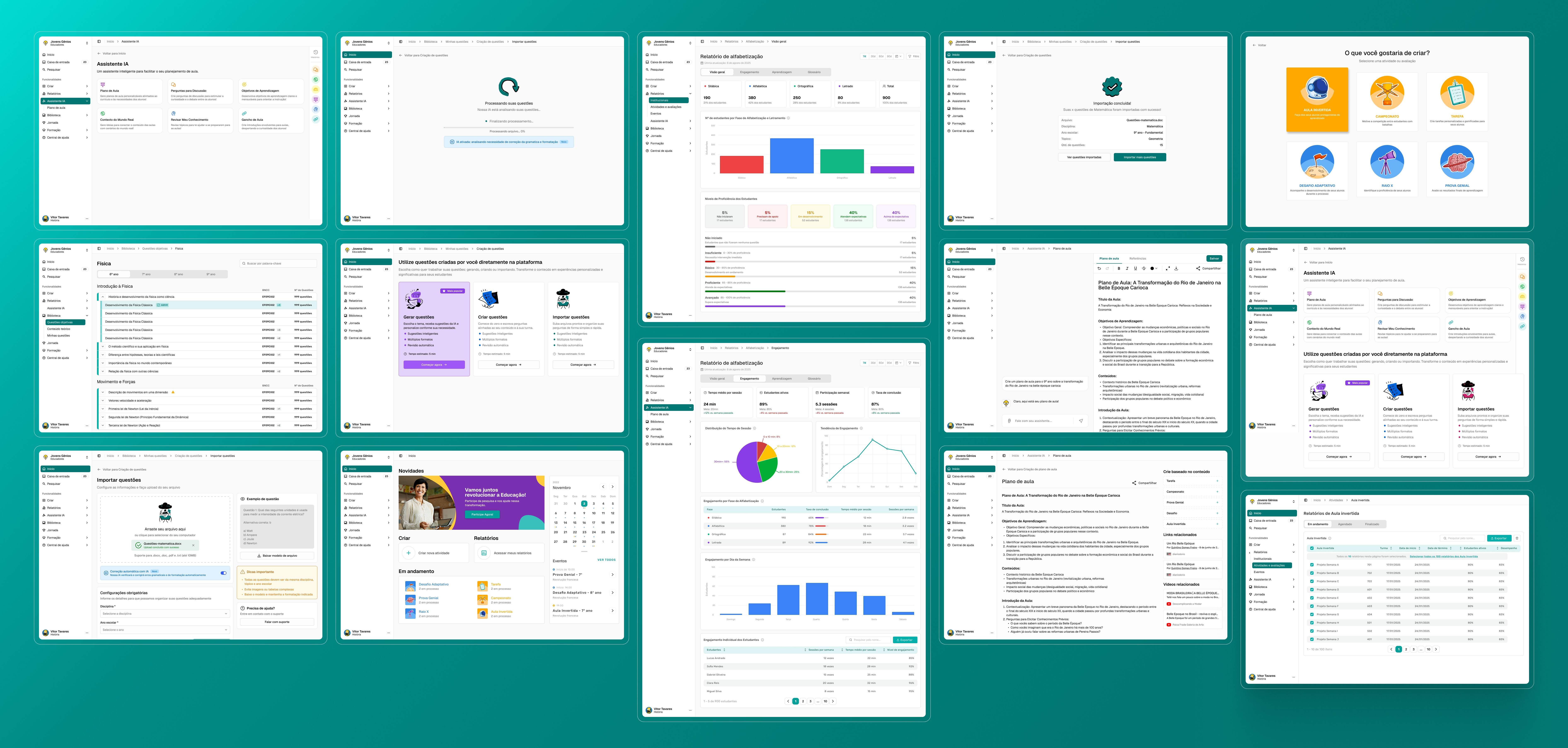
An AI-powered assistant that helps educators create lesson plans faster and tailor activities to students’ specific needs.
Deep Learning Reports, providing rich insights at student, class, school, and network levels. As one educator described during research:
“It’s like taking a snapshot of exactly where the student is in their learning journey.”
Beyond product outcomes, I was also responsible for defining and tracking design metrics, helping the design team clearly demonstrate its impact on both user experience and business performance.
This project marked a complete turnaround — transforming the Educators’ Platform from a liability into a core strategic asset for Jovens Gênios.
Jovens Gênios is a Brazilian edtech that combines AI and gamification to personalize learning, reduce educational gaps, and support impactful public policies, reaching over 1 million users across 2,000+ institutions with proven gains in engagement and learning outcomes.
Company
Jovens Gênios
Timeline
2022
—
2026
Role
Product Designer
Project overview
When I joined Jovens Gênios, I was appointed as the lead Product Designer responsible for the Educators’ Platform. My mission went far beyond a visual refresh: the platform needed to be rebuilt from the ground up.
At the time, the product was designed as mobile-first, but in practice it was mobile-only. On desktop, the experience was severely compromised — the interface behaved like a stretched tablet, with mobile dimensions, bottom navigation, and touch-first interactions entirely misaligned with desktop usage. This resulted in a frustrating and inefficient experience for educators.
Before proposing solutions, I focused on understanding real usage patterns. Data revealed that over 80% of educators accessed the platform via desktop or notebook, while the platform’s CSAT was critically low at 30%. Educators actively resisted using the product, which directly impacted student engagement, contract renewals, and revenue.
My goal was to rebuild trust with educators by delivering a platform that genuinely supported their daily workflow, respected their context, and scaled with institutional needs — all within a tight 3-month deadline for a full public relaunch.
Challenges
The project started in a moment of active crisis. Educators avoided the platform, schools questioned the value of the investment, and churn was increasing as a direct consequence of low adoption.
The main challenges included:
Severe mismatch between user behavior and product design, with desktop users forced into a mobile-centric experience.
Low satisfaction and resistance from educators, who perceived the platform as a blocker rather than an enabler.
High business pressure, with churn impacting B2B and B2Gov contracts.
Short delivery timeline, requiring fast yet confident decisions.
Technical and business constraints, demanding close collaboration with engineering and product stakeholders.
To address this, I conducted a full platform audit, combining usability analysis, qualitative interviews with educators, behavioral data, and system limitations. I worked closely with engineering to understand feasibility, while continuously aligning design decisions with business rules and strategic goals.
Throughout the process, I also established a data-driven design practice, leveraging tools such as Microsoft Clarity, Amplitude, and PostHog to monitor usage patterns, validate hypotheses, and track the impact of design decisions.
Results
The redesigned platform launched successfully within the proposed timeline and delivered immediate and measurable impact.
Key outcomes included:
CSAT increased from 30% to over 90%, remaining consistently high after launch.
Churn was significantly reduced, directly linked to improved educator adoption.
The platform became a strong driver for new B2B and B2Gov contracts, contributing to over R$20M in revenue.
Educators shifted from resistance to advocacy, actively engaging with the platform in their daily routines.
Post-launch, I continued evolving the product by introducing high-impact features, including:
An AI-powered assistant that helps educators create lesson plans faster and tailor activities to students’ specific needs.
Deep Learning Reports, providing rich insights at student, class, school, and network levels. As one educator described during research:
“It’s like taking a snapshot of exactly where the student is in their learning journey.”
Beyond product outcomes, I was also responsible for defining and tracking design metrics, helping the design team clearly demonstrate its impact on both user experience and business performance.
This project marked a complete turnaround — transforming the Educators’ Platform from a liability into a core strategic asset for Jovens Gênios.