Jovens Gênios is a Brazilian edtech that combines AI and gamification to personalize learning, reduce educational gaps, and support impactful public policies, reaching over 1 million users across 2,000+ institutions with proven gains in engagement and learning outcomes.
Company
Jovens Gênios
Timeline
2024
—
2025
Role
Product Designer
Project overview
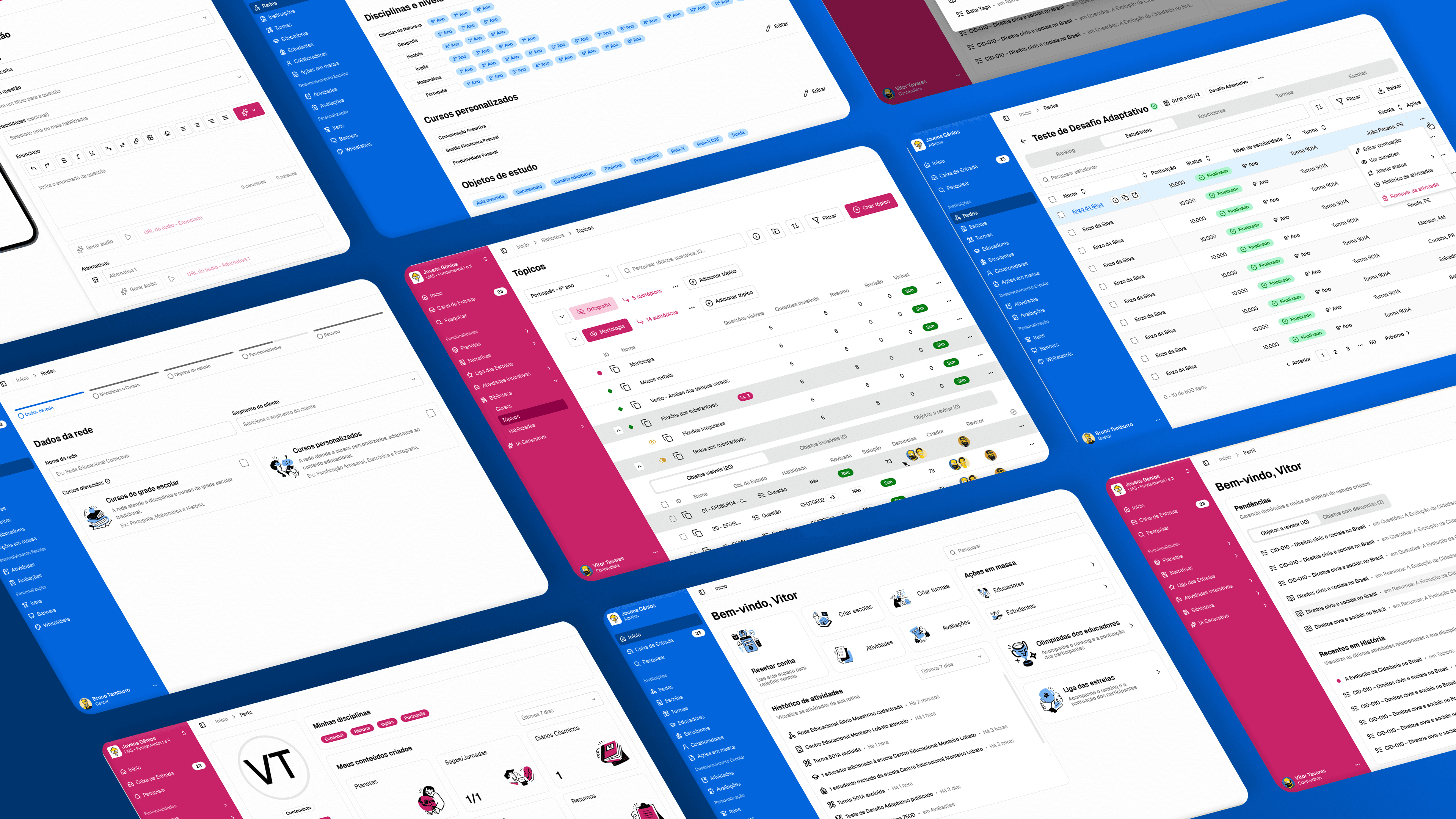
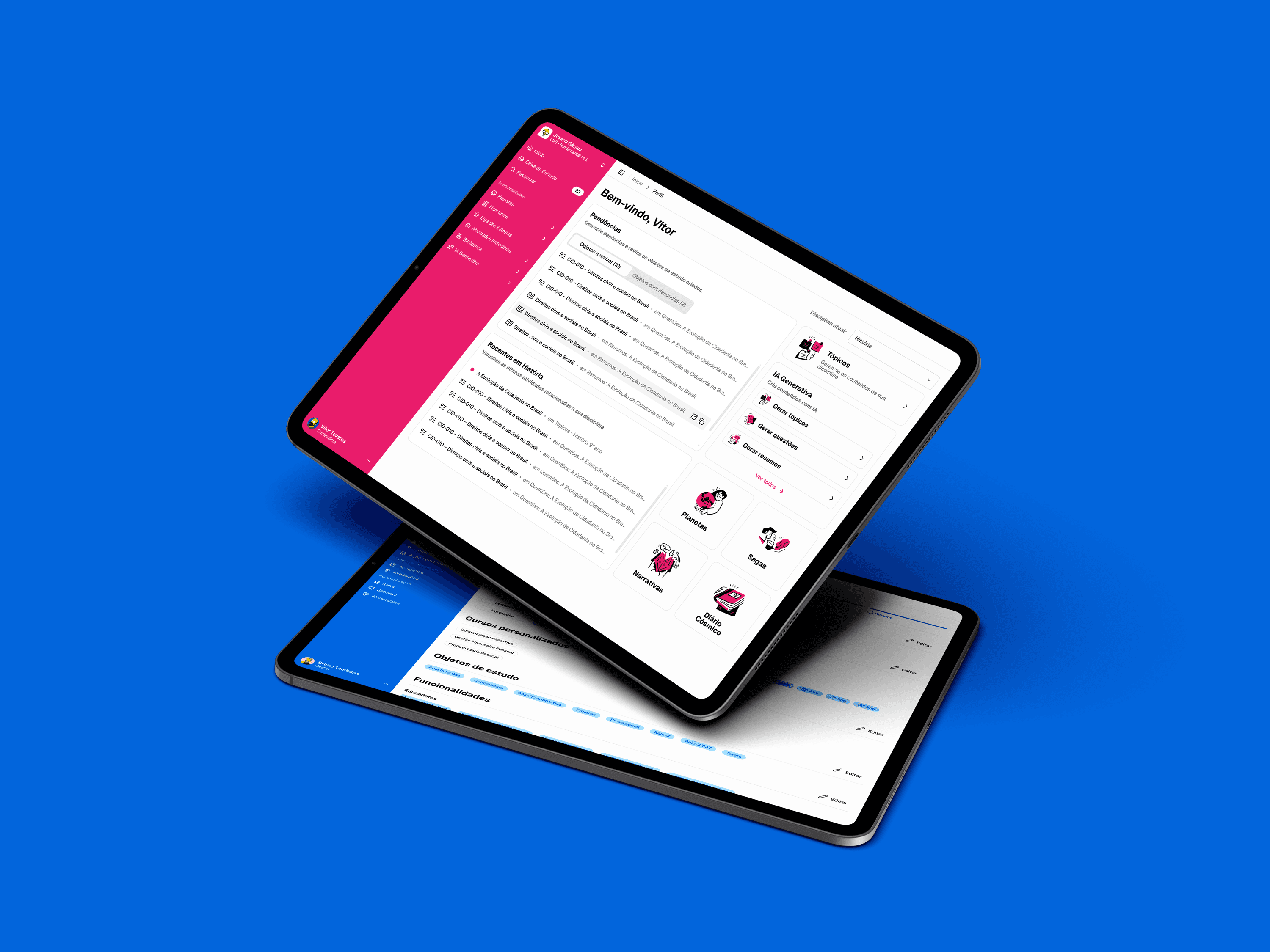
As the lead Product Designer, I was responsible for the complete reconstruction of two core internal platforms:
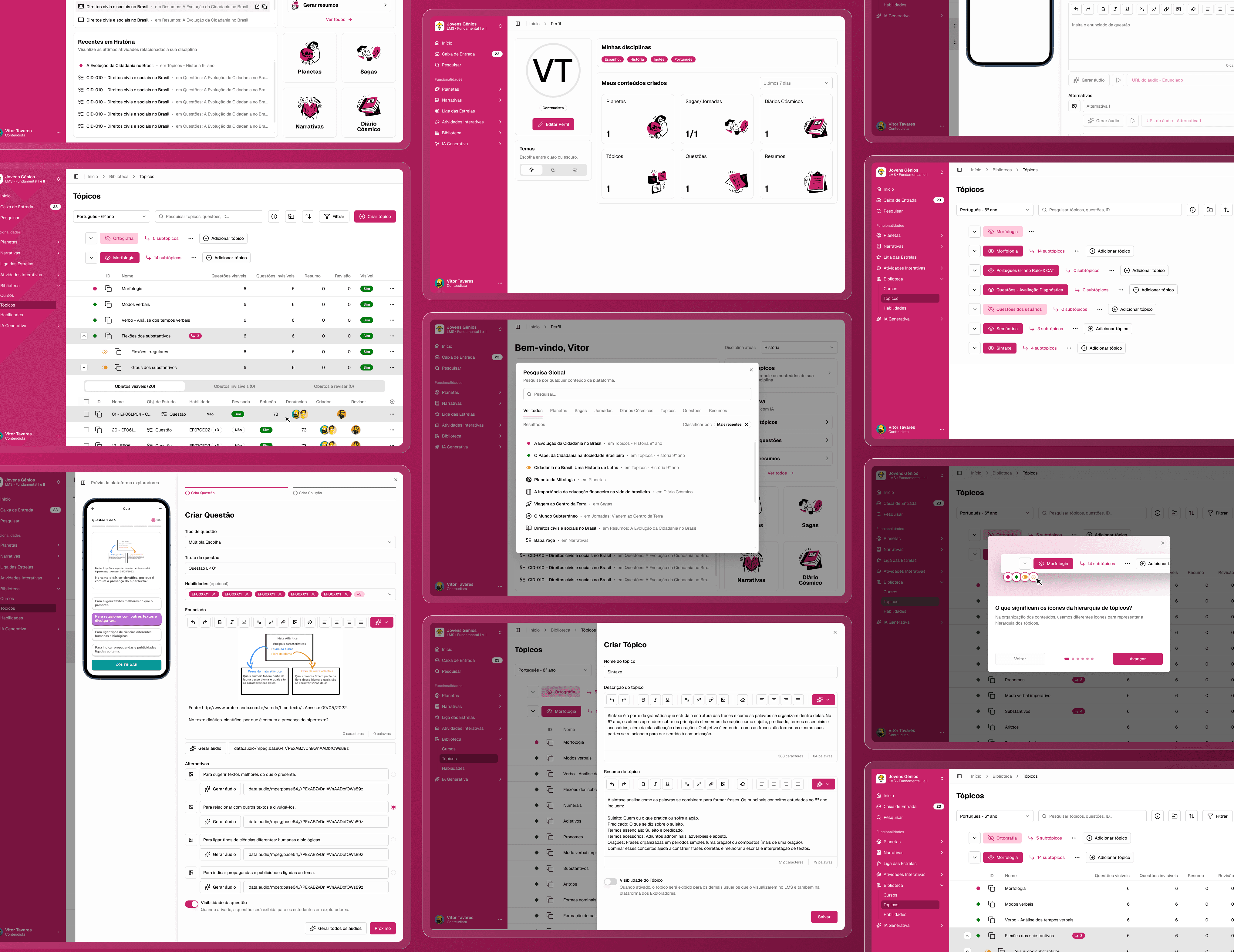
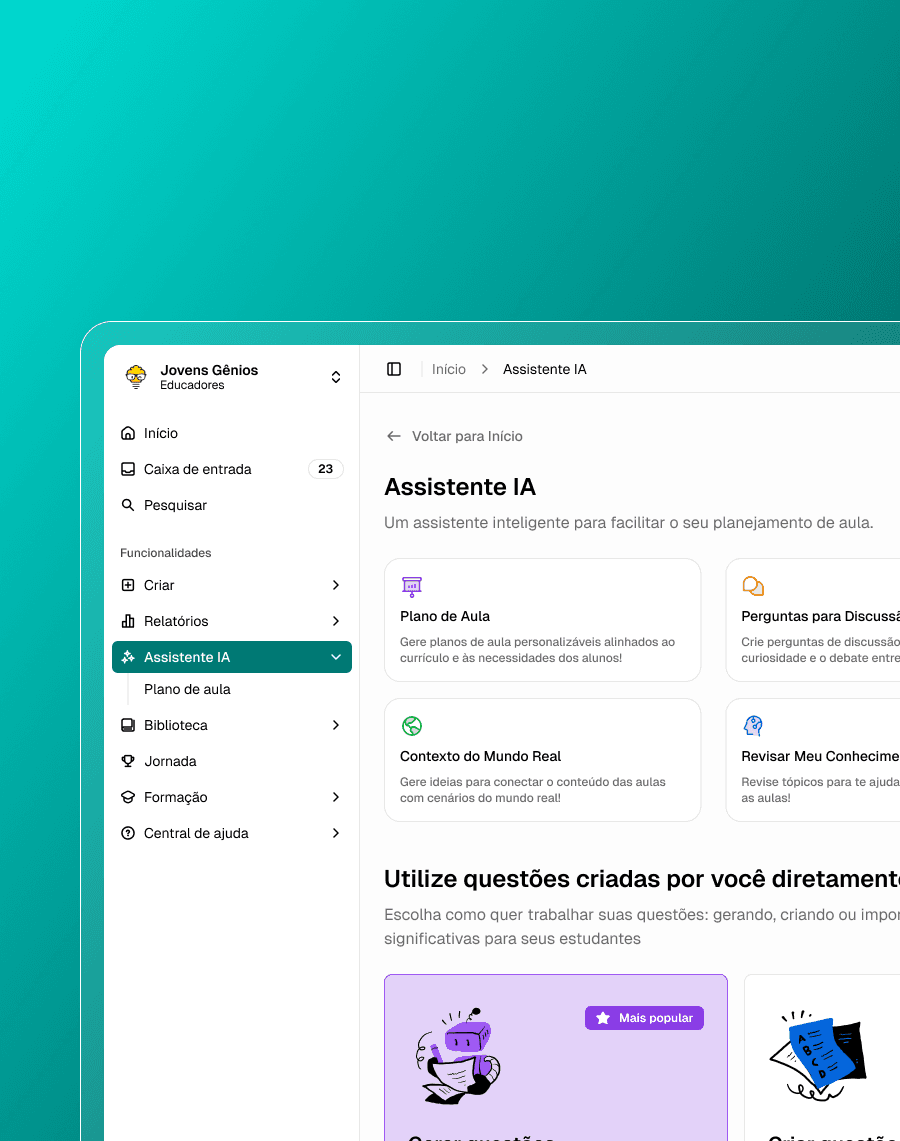
LMS (Content Platform) – used by the pedagogical team to create, edit, manage, and monitor educational content distributed to educators and students.
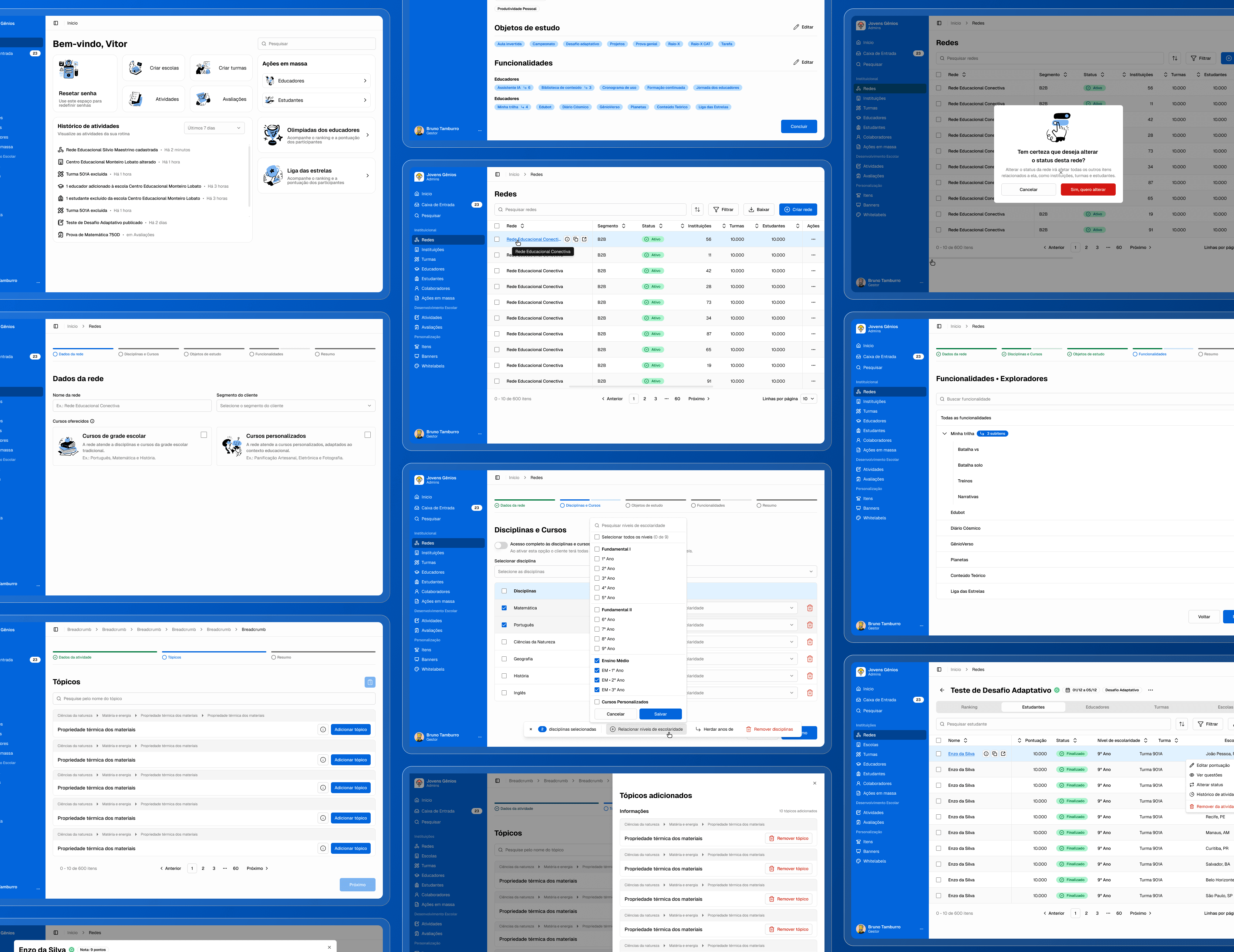
Admins Platform – used by Commercial and Customer Success teams to manage institutions, users, contracts, and operational data.
Both platforms were critical to the company’s core operations. However, they suffered from poor usability, architectural fragmentation, recurring bugs, and limited functionality. This directly impacted team productivity and generated constant engineering overload for fixes and adjustments.
The project was not a visual redesign — it was a full structural rebuild, involving architecture redesign, internal research, system standardization, and design system implementation.
Challenges
1. Operational Complexity Across Multiple Teams
Each platform served different user profiles with distinct goals:
Pedagogical teams managing content logic and educational performance
Content specialists editing and structuring materials
Commercial teams managing contracts and institutional accounts
CS teams monitoring engagement and operational metrics
The previous systems lacked clear information architecture and cross-functional alignment. Workflows were fragmented, unintuitive, and inefficient.
The challenge was to design structured, scalable workflows that reduced friction while respecting business rules and operational constraints.
2. Low Productivity + Engineering Overload
Due to poor system structure and recurring bugs:
Teams relied heavily on engineering for small adjustments
Manual workarounds were common
Operational time was wasted navigating inefficient interfaces
Feature expansion was slow and costly
The redesign needed to:
Reduce dependency on engineering for minor changes
Improve system stability through clearer structure
Enable faster internal operations
3. Rebuilding Information Architecture from Scratch
Since this was a full reconstruction, I led:
Internal research with all operational teams
Workflow mapping and bottleneck identification
Definition of new information architecture
Modularization of key system areas
The goal was to transform the platforms from reactive tools into operational control centers.
4. Establishing a Scalable Design System
To ensure long-term sustainability, I structured a new design system foundation, aligning both platforms under consistent UI logic and reusable components.
The system focused on:
Functional clarity over visual decoration
Modular components for internal tools
Data-heavy interface patterns
Compatibility with Tailwind-based implementation
Long-term maintainability
This significantly improved consistency and reduced design-to-development friction.
Results
The full reconstruction of both internal platforms resulted in:
Substantial increase in internal productivity
Reduction in operational friction across Pedagogical, CS, and Commercial teams
Decreased reliance on engineering for minor fixes and adjustments
Improved system stability and clearer workflows
Faster implementation of new features and business requirements
Better visibility into operational and institutional metrics
Beyond interface improvements, this project restructured the internal backbone of the company’s operations.
It strengthened:
Cross-team alignment
Data reliability
Operational efficiency
Scalability for future growth
This work reinforced my ability to design not only user-facing products, but also complex internal ecosystems that directly impact business performance.
Jovens Gênios is a Brazilian edtech that combines AI and gamification to personalize learning, reduce educational gaps, and support impactful public policies, reaching over 1 million users across 2,000+ institutions with proven gains in engagement and learning outcomes.
Company
Jovens Gênios
Timeline
2024
—
2025
Role
Product Designer
Project overview
As the lead Product Designer, I was responsible for the complete reconstruction of two core internal platforms:
LMS (Content Platform) – used by the pedagogical team to create, edit, manage, and monitor educational content distributed to educators and students.
Admins Platform – used by Commercial and Customer Success teams to manage institutions, users, contracts, and operational data.
Both platforms were critical to the company’s core operations. However, they suffered from poor usability, architectural fragmentation, recurring bugs, and limited functionality. This directly impacted team productivity and generated constant engineering overload for fixes and adjustments.
The project was not a visual redesign — it was a full structural rebuild, involving architecture redesign, internal research, system standardization, and design system implementation.
Challenges
1. Operational Complexity Across Multiple Teams
Each platform served different user profiles with distinct goals:
Pedagogical teams managing content logic and educational performance
Content specialists editing and structuring materials
Commercial teams managing contracts and institutional accounts
CS teams monitoring engagement and operational metrics
The previous systems lacked clear information architecture and cross-functional alignment. Workflows were fragmented, unintuitive, and inefficient.
The challenge was to design structured, scalable workflows that reduced friction while respecting business rules and operational constraints.
2. Low Productivity + Engineering Overload
Due to poor system structure and recurring bugs:
Teams relied heavily on engineering for small adjustments
Manual workarounds were common
Operational time was wasted navigating inefficient interfaces
Feature expansion was slow and costly
The redesign needed to:
Reduce dependency on engineering for minor changes
Improve system stability through clearer structure
Enable faster internal operations
3. Rebuilding Information Architecture from Scratch
Since this was a full reconstruction, I led:
Internal research with all operational teams
Workflow mapping and bottleneck identification
Definition of new information architecture
Modularization of key system areas
The goal was to transform the platforms from reactive tools into operational control centers.
4. Establishing a Scalable Design System
To ensure long-term sustainability, I structured a new design system foundation, aligning both platforms under consistent UI logic and reusable components.
The system focused on:
Functional clarity over visual decoration
Modular components for internal tools
Data-heavy interface patterns
Compatibility with Tailwind-based implementation
Long-term maintainability
This significantly improved consistency and reduced design-to-development friction.
Results
The full reconstruction of both internal platforms resulted in:
Substantial increase in internal productivity
Reduction in operational friction across Pedagogical, CS, and Commercial teams
Decreased reliance on engineering for minor fixes and adjustments
Improved system stability and clearer workflows
Faster implementation of new features and business requirements
Better visibility into operational and institutional metrics
Beyond interface improvements, this project restructured the internal backbone of the company’s operations.
It strengthened:
Cross-team alignment
Data reliability
Operational efficiency
Scalability for future growth
This work reinforced my ability to design not only user-facing products, but also complex internal ecosystems that directly impact business performance.